Digesting Disillusionment

digesting disillusionment

I bought a cool backpack on my summer vacation at the end of last month. It really came in handy for hauling around water bottles and any little things my wife and I happened to purchase.

Hemp backpack

Today I brought it to work for the first time because my best friend wanted to borrow my copy of Against the Day since his is in one of a dozen tubs of books in a storage unit temporarily. Of course, I obliged.

Normally I bring a canvas messenger bag to work. In it I store my planner and usually a folder or two. It’s fairly thin, though I can easily squeeze in one, sometimes two novels. But if you’ve ever seen Against the Day, you’ll realize that it’s a thick book, at not quite half a million words (about a Descriptions of Heaven’s worth shy of the half million actually). So, I thought this was a great time to use my new backpack. And while it made carrying Against the Day much easier, I totally forgot to transfer the folder I keep my latest handwritten dialogue in over to it from my messenger bag.

The reason I’m telling you this? Well, I didn’t get a chance to type up the dialogue I wrote. In other words, I wrote it, stored it, and haven’t thought about it since early in the week. And now that I’m at work from 7am to 11pm on the last possible day to announce the completion of my next dialogue, I have to admit I’m only guessing at the title. I think it’s Digesting Disillusionment. Although I might be a little off. So, just to clarify, it’s the working title. So if it changes or is published by somewhere under a slightly altered name, you know why.

So, with that said, leave your comments, questions, and stories about your own writing mishaps below.

disillusioned bride

In this dialogue, a woman drunkenly snapchats her friends while wearing the wedding dress from the wedding that never happened. A friend goes to visit, but the ex-bride-to-be won’t open the door.

 Photo by Efes from Pixabay (free for commercial use).

Review of Uncle Tom’s Cabin


Review of Uncle Tom's Cabin

Uncle Tom’s Cabin is a classic written by Harriet Beecher Stowe. The novel was published in 1852 and gained a wide readership. The story follows two main plot lines. That of Tom and that of George, Eliza, and their child.  The latter group are all escaped slaves, a family seeking freedom in Canada. Their passage to freedom is fairly straightforward with only minor detours and close calls. Tom’s life leads him south from Kentucky. His freedom is found in a Christian death.

I have to say, while the book is credited with stoking anti-slavery feelings in the North and South, this 1850’s best-seller is outdated in so many respects. The views against slavery are often undermined by “racialist” points of view. Thankfully not all the caricatures associated with the novel are true. Apparently a lot of the latter antipathy toward the book stems from theatrical reenactments of the novel. . . in the form of minstrel shows. *shudders*

The characters range from Christians who hate slavery to atheists who hate slavery, plus everything in between. And I admire that. I think Stowe is at her best with the characters of George and St. Clare who are good, but complicated people. Stowe should have spent more time on the escaped slave, George, and less on St. Clare, in my opinion. While St. Clare, the good-hearted slave owner, is a perfect character for slave owners of the time to relate to, his narrative spirals into a Christian conversion story. This fails to push the anti-slavery theme since elsewhere in the book being Christian doesn’t mean disavowing slavery. When it appears (and it appears a lot) sentimentalism and over-the-top chapters about Christianity fall flat on modern ears, and apparently fell rather flat even a couple of generations later. Since the Civil War, writers and critics have found more and more fault with the novel and it’s portrayals of African Americas, even though it was likely responsible for heating up the debate against pro-slavery views of the time. To me, if it had a hand in the freeing of even one slave, then the book has value. After all, the views expressed about race weren’t singular at the time. In the end, Uncle Tom’s Cabin wasn’t about ending racism, but about ending slavery.

I wouldn’t recommend reading this novel unless you’re already accustomed to 17th century literature. Fans of Dickens might enjoy certain parts more than I did (they both use ironic narrative ignorance as a humorous literary chide on social mores, which annoys me but also explains why both Stowe and her novel were such big hits in Britain). If you do pick up this book, don’t expect to read something where you’re going to find heroes for the children in your family or classroom. Uncle Tom’s Cabin will undoubtedly make a modern reader a little uncomfortable when it expounds on race and a little bored when it tries too hard to bring tears to your eyes.

Uncle Tom's Cabin

What Makes You/You?

What Makes You/You?

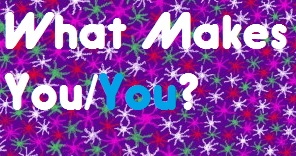
Sally Sheinman, a visual artist living in the UK, created an amazing piece of artwork using my words for her ongoing project What Makes You, You?. Anyone can submit an answer to this question, and for some of these she creates a unique work of art. You can see the collaboration and find more about the project and the artist on her website.

A striking part of Sheinman’s piece is it’s living lifeforce embodied in the main part of the image. These multicolored, neural-like splotches remind me both of DNA and stars (and we are as much star-stuff as we are the DNA and neural connections within us). I love the details included on the figure: a mouth, a heart, and a brain. Sheinman really captured my words in a striking way in this “new kind of portraiture.”

I’ll be including this piece in my oeuvre partly because it’s my words, and since I’m a writer, words are pretty much all I’ve got. But mostly because I want to make sure the most people possible discover the work of Sheinman. She’s talented and truly an artist who knows the value of collaboration and community.

To view the full size image and check out other pieces from the What Makes You You? project, simply follow this link. 

What Makes You You? Randal Eldon Greene July 15th
Find Sally Sheinman
on her website

on Facebook

or on Twitter

Maskenfreiheit

maskenfreiheit

The last dialogue I wrote was short. This one is long. Like one of my longer pieces to date. The idea of a masked ball was floating around my head for quite a while. I knew I wanted my characters to be wearing animals masks and that I wanted to refer to them by their animal.

Well, finally a story coalesced around the idea. It’s dialogue 27. So I’m over the halfway mark now in my 2018 writing challenge.

Leave your thoughts in the comments below. I’d love to know what your writing goals are (or were) this year and how they have (or haven’t) been progressing.

Animal Masks Photo by Angel Yulo

Photo by Angel Yulo

2018 Challenge Halfway Point

2019 Challenge Halfway Point

I gave myself a challenge for 2018, and I’m at the halfway point. I challenged myself to start a series on Medium and to post to that series once a week. What I primarily write is fiction, so I decided to have my series follow me as I wrote a dialogue-only short story collection.

Idea Flash

The idea germinated from two unpublished flash-length manuscripts I had in my computer’s story folder. Both were a single, long paragraph. The first was totally in dialogue, with the speakers differentiated through the use of dialect and italics. This story was “Expire,” and I always knew it’d be the first piece in some future collection; I just didn’t know what that collection would be. It’s the first of my dialogues for many reasons. Primarily though, it’s because the content and form of the story both explore the complications of communication through storytelling. Meaning is difficult to convey, especially when you’re working with literary fiction where there may be multiple meanings or the form can be odd, experimental, and artfully crafted.

The second story was a monologue originally designed as a page-length long sentence. I pulled it up, proofread, changed some things within the extant text, added a second speaker to comment on the focus of the long sentence, and — voila! — I had another dialogue.

And so with these two as my base, I challenged myself to write a collection of creative conversations — dialogues all. A challenge not only because of the tight weekly schedule, but also because of the constraints of the form. Dialogues are more or less constrained by an inability to indicate inner-thoughts, background information, motivation, or describe characters and setting (at least I can’t do any of these things without verbalizing them, which isn’t always possible or desirable in this form). While constraining, much like a choosing a poetic form to constrain one’s writing, restricting myself has also been freeing; I haven’t been able to choose from the infinite options normally available to a writer of fiction. Having infinite choices eliminated is in its own way liberating. While I can be experimental and push boundaries to a degree, I still know one thing: it’s all got to be dialogue.

writer silhouette

So, having stuck with the terms of the challenge I set (only dialogue and at least once a week), now that I’m halfway through, I want to reflect on what I’ve done thus far. Specifically, 1) How have I done? 2) What would I do differently? 3) How will I proceed? 4) Will I do it again?


How have I done?

I started the series by posting an introduction the first week of January. Every week after that I’ve dutifully put out a dialogue. So I’ve succeeded in that respect. But I haven’t succeeded in every respect.

One of the reasons I gave myself this challenge (outside of forcing myself to complete fiction writing projects quickly) was to build my fan base by putting writing life out there, letting people see the writing journey as it happens. While I’ve gotten a few more blog followers just from being more active on WordPress where I’ve also posted weekly about the latest dialogue, my Medium stats indicate that I haven’t really increased my readership for my fiction — and it’s my fiction reader fan base I am attempting to grow. I’ve done something not quite right. My readership remains dismally low. So low, in fact, that I count it as nonexistent.

Dialogue series stats


What would I do different?

The first thing I would have done differently is to have chosen a platform for my updates other than the Medium series platform. There are myriad issueswith the series platform, including accessibility problems and an issue with subscribers actually getting notifications when a series is updated. I also figured out that series have even worse read ratios and interactions from readers than your typical self-posted article. It’s really only publications who opt to use Medium as their parent platform that give most writers any real chance of visibility (two of my dialogues were sent and accepted into Medium publications, The Creative Cafe and Lit Up).

So even without accessibility issues and a broken notification system for series, I may not have found it any easier to build a fan base or increase readership had I simply been self-posting updates or even stories as regular Medium articles. As it is, my stats indicate that I am — though not intentionally — writing these series updates solely for myself. No one else views them. I’ve added to my oeuvre and kept to the strictures of my challenge, but the public journey hasn’t brought in new readers like I thought it would.

While there are no guarantees that another platform would have gotten me more readers, I think the series platform simply doesn’t work for writers trying to build their platform around it, though those with an existent platform could arguably succeed with it. Writing for publishers on Medium seems like the best approach if you’re going to do Medium. Could I choose again, I’m not sure what I would go with (Medium articles, Wattpad, solely my blog, etc.) but it certainly would not be the Medium series platform.

door choices.jpg

How will I proceed?

I am failing to gain readers even as I weekly come closer to completing a short story collection, so why continue to write updates at all if I don’t have anyone to read what I’ve written?

As Rosie Leizrowice, one of my favorite bloggers, wrote: “If you love the process, you react the same way to failure as you do to success.”

I am successfully writing; I am failing to reach readers. I don’t care. I love the process. So I will carry on doing exactly what I am doing. More or less.

Vision Planning Strategy Process GOAL puzzle

The one thing I’ll do differently does not change my process, but is itself another process. Since no one is really taking this writers journey with me, I am going to seriously start seeking publication in zines, magazines, journals, and literary reviews where allowed.

While the series itself is just acting as a kind of one-stop place for me to easily view my challenge updates, the process stays intact. The process has allowed me to create at an accelerated rate, far surpassing my normal leisurely speed of writing where I tend to setting aside what I’ve written, only to come back, edit more, and set aside again, practically ad infinitum. And since I’m not reaching readers with the challenge itself, maybe I can reach readers and publishers at the same time.


Will I do it again?

Not exactly. While I love the process, I also need to learn from the process, whether that process led to success or failure or (as in this case) a mix of both. What I’ve learned is that imposing deadlines on myself is a fantastic motivator to work more quickly and cleanly. I think knowing this will help me when I turn my attention to planned future collections of stories and essays. I might even be able to apply the most positive parts of this process to future novels.

What I won’t do again is give myself extra work without more assurance that it will pay off in some tangible way. While meeting obligations when under the scrutiny of the public eye is a powerful motivator, I’ve found that without the public eye or an expectant readership I’m still finding success in sticking to the deadlines of my challenge. Deadlines that — I came to realize a while ago — are really for myself.

I’ve also realized that the information-addicted internet culture doesn’t really need me to add my personal writing challenge to the digital cacophony. If I want my words read, I’d do better to stick to the traditional routes of finding readers through the types of publishers whose subscribers have the temperament and attention my words deserve.

So I will be cultivating a process — a process that includes setting deadlines to complete a story, a chapter, or to have a work ready to send to a potential publisher. And you can be sure that once this challenge is done, I won’t be writing another book of dialogues. But the stories and the words, oh yes, they will keep coming.

dialogues

All photos from Pixabay, free for commercial use & no attribution required. 

LIVE, LAUGH, LOVE

LIVE, LAUGH, LOVE

I dashed off a quick dialogue this week and even decided to already submit it. I hope it comes off as ironic as the phrase “live, laugh, love” comes off kitschy (kitschy to the point of being meaningless).

While I am devoted to cultivating a fulfilling life, I find “live, laugh, love” to be the condensed expression of all that is opposite to what I mean by “fulfilling life.”

According to my medium series (where I’m actually keeping count during this writing challenge) this is my 26th dialogue. So this marks the halfway point in my challenge! Thanks for cheering me on, Bookworms!

Train Lit Mag

Train Lit mag


I’m excited to announce that my 15th dialogue, Jonathan Knudsen, has found a home in Train Lit Mag. The short story will be featured for a week on their website.


As you might have noticed, my weekly dialogue post did not show up last week. I was on vacation and didn’t manage to find time to post on Saturday. But rest assured, I did get a story done. Cut is the title of the dialogue I finished but failed to announce. I’ll be busy tomorrow morning writing the next weekly dialogue. I haven’t decided which idea of the many stories floating around my noggin I’ll work on. Possibly another one with a German title.

Let me know what you think of Jonathan Knudsen, and I’ll keep you all posted about any more dialogue publications that come along.

Skeleton with Headphones


Image Source: Pixabay. 

Vorchaoskampf

Callout68

What is the Chaoskampf? And what came before (vor) it?

Great questions!

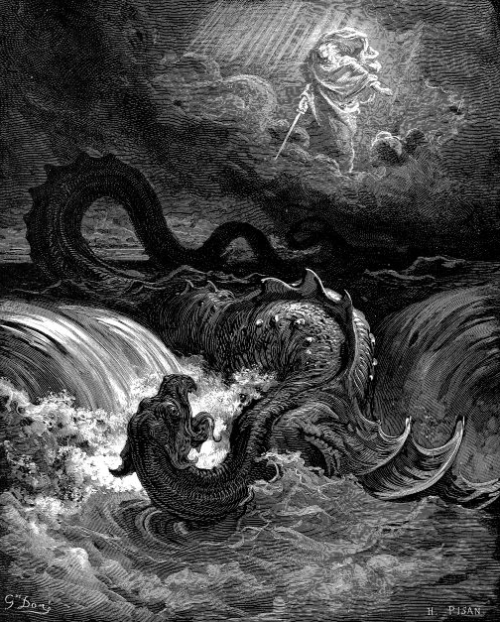
The Chaoskampf is a term given to a mythological battle between a deity and a serpent or dragon. This archetypal story is found in mythologies all over the world, from Norse to Greek, from Judaism to Egyptian religion, and beyond.

My story takes place just slightly before the fight. Watch this amazing video about how leviathan fits into mythologies across the world and then go here to find which dialogues are published and free to read online. You can also keep updated via Medium.

Kaoskampf

“Destruction of Leviathan,” Gustave Doré

The Bat-Cat God and Other Self-Reproachments

The Bat-Cat God and Other Self Reproachments

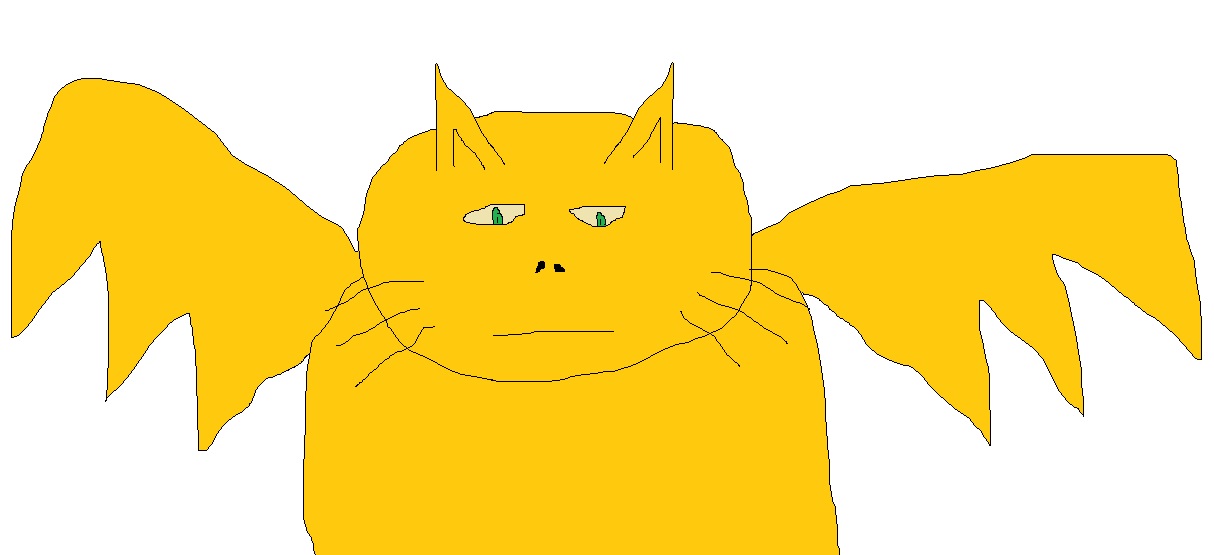
Bookworms, have you ever had a regret? Have you ever regretted your constant regrets? Well, I’ve written a story for you. It’s called The Bat-Cat God and Other Self-Reproachments, and it’s a part of my dialogue series.

Read all of Randal’s available dialogues by following this link to his Medium series.

The Bat-Cat God

Wine Drunk Together Again

Wine Drunk Together Again

Yesterday my latest short story in dialogue was featured for my series. Wine Drunk Together Again is a story about old friends meeting up overseas to relive their post-highschool trip to Spain. The story is divided into three parts, each named after the wine grapes used to create the current bottle on their table.

You can read all my available dialogues in my online fiction web series, Dialogues: a Collection of Creative Conversations. If you have any troubles accessing the series, let me know.

Click here to find the series and links, or just see the publications tab.

Wine and Wine Grapes

Image source: Pixabay (free for commercial use, no attribution required).