Interview with Cayce Berryman

callout9
Cayce Berryman, an editor with a passion for words and helping writers refine and discover their voice, conducted an interview with me about my forthcoming novella, Descriptions of Heaven.

Check out the interview here: Rising Writer No. 45

cayceberrymanAbout the interviewer: Cayce Berrbyman is a freelance editor, copy editor and newspaper producer for Gannet (USA Today Network). She holds a degree in Journalism from Del Mar College and bachelors in English and Creative Writing from Southern New Hampshire University.
*
*
*
*
*
*
*
*

website: caybeberryman.com

On the Power of Books

callout8

Libby sent me the below meme via Facebook and asked if I agreed. After answering her question, we decided that my response—with only minor edits—would make a great little post. So below is my reaction to the John Piper’s quote.

 screen-shot-2016-09-20-at-6-00-28-pm

I agree to a small extent. The majority of people lift quotes from larger works of prose or poetry, and then they apply it to their lives in some way, motto-like and whatnot.

However, this particular quote misses out on the power of a work in its totality. A stylistically uncluttered, unquotable book could, arguably, be profound in its wholeness yet furnish no stand-alone pieces to extract. It is only as a total thing that it affects the person who reads it. And think of how more powerful a total work is when it has numerous moments of quotable-ness to reflect upon in the context of the whole.

I’ve always found whole books to be much more powerful then quotes. Quotes are overt. When recalled they can direct action. A book, on the other hand, echoes through one, ripples longer in the psyche without having to be recalled in order to enact its effects. In this way, it’s more life changing.

But for those actively seeking to change their behavior or find a model or motto to live by, quotes at the level of the paragraph or sentence (much like prayer beads and their accompanying “Hail Mary” or fetishes that serve a similar function of a call to meditation) give one a more tangible signpost to direct their change. In this sense, the meme is correct. For those seeking such changes or to those whom are impressionable to powerful words in the micro, yes, the level of paragraph and sentence are very much the stepping-stones of their change. Though this will not mitigate the larger, macro-level impressions whole books leave when the quote is not present to mind.

Books are, truly, more powerful than any one quote extracted from them.

Descriptions of Heaven Cover Reveal

Callout6
It’s time. The long awaited first book cover reveal.

First, a little about the book. Descriptions of Heaven wasn’t originally intended to be a book. It was a writing exercise, at most a short story. I started, as I do with most things, at the end. The last line.

As many of you know, this book is—in part—about a lake monster. This central image came to me after a night of rare insomnia. The next day, still unable to sleep or function in any appreciable way, I sat on the couch binge-watching a monster hunting show that was having a marathon run. And it was with one of these episodes that the muse decided I’d find inspiration. The particular episode featured, of course, a lake monster. It wasn’t the Loch Ness Monster we are all familiar with. No. It was another lake with another monster. In fact, the show’s host mentioned a number of lakes with legends of monsters lurking in their depths, and, if my memory serves me right, the number was in the hundreds.

Thus the beginning (or rather the ending) of Descriptions of Heaven. I’m not going to reveal the ending of the book here. What I will say is that I got off my back, took my sleep-deprived self down the steps to the basement where I had my writing desk, and I wrote. And I wrote. And I saw it was more than a writing exercise. So I wrote more. And I saw that whatever it was, it was a thing with chapters. And I wrote. And as I wrote, it became this little, lyrical novel: Descriptions of Heaven.

I wrote the first draft between winter 2012 and spring 2013. Since then I’ve picked it up to revise and put it away a few times. And it was last fall that I finally decided it was ready to be sent out in search of a publisher.

And the publisher I went with, Harvard Square Editions, has sent me a finalized cover. For my IRL Facebook Friends I’ve given a sneak peak of this cover, using an unpolished version of the main artwork as my cover photo without telling anyone (kind of an Easter Egg for those I know) for a few months now.

And now it’s time. The reveal is here:

Descriptions.indd

Descriptions of Heaven comes out November 22nd. Stayed tuned for news on book giveaways/contests/etc by subscribing to this blog, following on twitter @AuthorGreene, and liking on Facebook.com/RandalEldonGreene 

[EDIT] You can now purchase the book on Amazon!

Descriptions of Heaven official release date

Callout5

My début novel, Descriptions of Heaven, will be available November 22nd.

There’s still a lot of work to do before this book makes it to the shelves. The team at Harvard Square Editions is busy finalizing a cover and approving the back cover text.
Info on pre-ordering will be posted as soon as I get the word.

Keep a look out for giveaways and contests. Follow, subscribe, and all that jazz to ensure you don’t miss out.

New Publication: COME LIGHT

Callout4

This is a wee bit of a late announcement, but I’ve got a new short piece of poetic prose published.


“Mable is a movie when I’m high. A tragedy. A romance. A porno streaming…


Read all of “Come Light” in Unbroken Journal’s March/April 2016 issue.


or Click here for an ebook view.

And check out the rest of the journal while you’re there. It’s spectacular.


***
***
***


Source: Pxhere – CC0 Public Domain

What the [BLEEP] is Literary Fiction?

Callout3


As a writer, I get this question a lot: What type of stuff do you write?


If I wrote mysteries, thrillers, fantasy, sci-fi, romance, or even regularly composed children’s books, I’d find this question not only easy to answer but could also use it to segue into a little sales pitch for my next book. This, however, is not the case. I’m not a genre writer. I write this thing called “literary fiction,” a so-called non-genre branch of literature which a lot of people have a problem with, either because it’s hard to define or because its sounds somehow pretentious. And pretty much every person without an English degree who I’ve given this answer to (and some with an English degree) has no clue what I’m talking about or has questioned the validity of the distinction. Isn’t all fiction, after all, literature? What makes one piece of literature more literary than another?


I feel the ambiguous term literary fiction needs a new name to help circumvent these problems. But before I offer up my suggestion, I’d first like to give you an idea of the problem here.
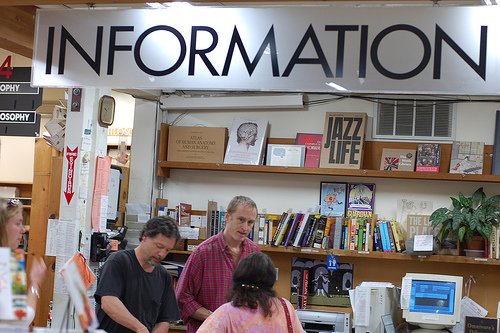
Have you ever walked into a Barnes and Noble and gone to the section 184241632_4dec885ef9where the majority of the fiction is kept? If you have, then you’ve seen (and maybe didn’t notice) that this section is labeled as fiction and literature. Wait? What? Why does the fiction section have such a redundant title? Well, kids, that’s because B&N wants to say they’re mixing two distinct types of literature without saying “we’re mixing two distinct types of literature” because what they’re really stating is that they’ve mixed in genre fiction with literary fiction. To make things more confusing—at least at the stores I’ve visited—they’ve separated out the sci-fi and fantasy into their own sections, leaving the romance and mystery-thrillers in with the literary stuff. Why they do this I don’t know, but it shows that either even the big box chains like B&N are confused about this or their marketing guys are trying to “expand” our reading repertoire by hoping a John Grisham fan will pick up To Kill a Mockingbird not realizing it’s a literary classic and that a fan of Graham Greene will mistakenly buy a copy of Raymond Chandler’s The Big Sleep expecting it to be an existential novel of deep contemplation (note: examples intentionally ridiculous).
 

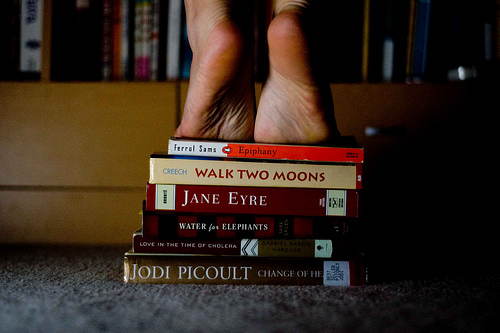
Okay, some of you readers at this point are probably saying: “Hold on a minute. Now just what in the [BLEEP] is literary fiction?” It does appear that I’ve defined it by what it is not, which is all the other genres of fiction. And a negative definition isn’t really a great definition. Nor is it helpful considering that Austin’s fabulous novel Pride and Prejudice is also a straight up romance, and Thomas Pynchon writes historical novels full of sci-fi and fantasy elements. Not only that, the canon of literary fiction includes the sparse short stories of Raymond Carver, the realism of Henry James, the novels in verse of Anne Carson, the experimental texts of Donald Barthelme, the masterful modernism of Virginia Woolf, and the comedic works of Shalom Auslande. 4252829033_a6c2dda824This is why I want to redefine literary fiction, to give it a coherence that allows for such diversity.
 

I was watching a fantastic lecture by Thomas Pavel on the history of the novel, and toward the end of the lecture he explained that once upon a time there was no such thing as “a separation between a high literature. . .for the connoisseur only, and a more popular literature, a literature which is for the great numbers.” And it was writers like Charles Dickens who were the last to really be writing for both audiences. It is from the quoted part of Pavel’s lecture where I found my proposed term (drumroll please): connoisseur fiction.


I like this term because it allows for a wide variety of fiction and yet doesn’t open the door to any and all fiction. Pavel postulates that this fiction—connoisseur fiction—came about because of high literacy rates; more readers meant more writing and allowed for certain people to develop discriminating tastes in what they read. This is similar to how connoisseurs of food (or foodies) came about. When food becomes abundant, it allows certain consumers of food to develop discriminating tastes about what they eat. Readers of connoisseur fiction look for a certain depth and complexity that genre fiction lacks. It’s not that they won’t/can’t enjoy genre fiction, it’s just that they have a literary palate which can appreciate this complexity, and it’s understandable if a reader prefers it to other literary genres. (And when it comes to writers, I always suggest reading outside of the genre you write in; it’s simply a good practice to read outside your writing zone—at least once in a while).


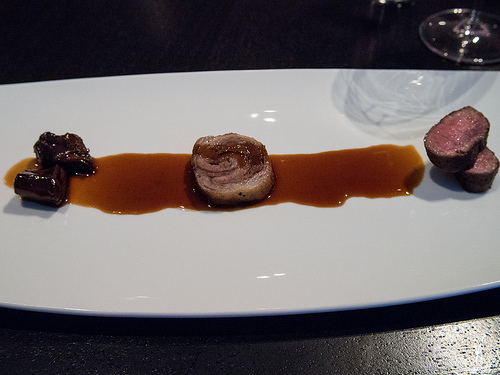
Understandably, the word connoisseur brings with it a potential for accusations of elitism. But what’s wrong with the enjoyment of fine 7303209838_93d07f1de9dining? In fact, I’d argue it’s good to develop this skill—and isn’t this exactly why so many of us aspiring writers study English at colleges and universities across the world (which, unless you’re just taking grammar and composition classes, is really synonymous with a Literary Studies degree)? We study English literature to develop a deeper appreciation for text and theory about text. We learn to read deeper. We learn to appreciate more than the surface elements of plot and character. What we become are connoisseurs of fiction. What we mostly study is fiction made for us: connoisseur fiction. It’s deep, rich, and entertaining. Yes, we all won’t like exactly the same books, but I argue we can all at least agree that this varied and luscious branch of literature should have a term that’s a bit easier to explain and define than literary fiction.
 

If you don’t like the term, that’s great. I’d love to see some comments proposing other possibilities or even a defense of good old literary fiction as the umbrella term we should stick with. And, no, I don’t believe that this blog post will change the world. Still, I think it’s a worthy discussion to have for both readers and writers of literary connoisseur fiction.
 

6982667785_f0cc95902f

photo credits: http://www.flickr.com/photos/44124466908@N01/184241632 Cody’s on Telegraph via http://photopin.com
http://www.flickr.com/photos/90231525@N00/4252829033 6/365 via http://photopin.com
http://www.flickr.com/photos/27119975@N00/7303209838 Alinea 2012 – Lamb ….?????……!!!!!!!! via http://photopin.com
http://www.flickr.com/photos/44048553@N03/6982667785 Porcelana via http://photopin.com
All under photopin https://creativecommons.org/licenses/by/2.0 (license)

Google Maps Makes History


Callout2I’ve shared this on my facebook page but I wanted to share this on my blog too.

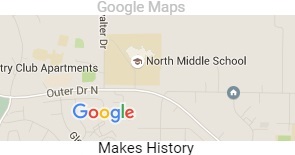
I remember when the Google Maps car drove by my house in 2012. I was sitting on the porch, working on my novella, Descriptions of Heaven. Google did not intend it, but they captured a moment of history in the making.

GoogleMapsMakesHistory-4

It’s so amazing to me that I am now working on final edits for the book. If all goes as planned, Harvard Square Editions should have the final draft of my book to review sometime late this month or early December. I can’t wait to have this work in print for all my friends and fans. I’ve had so much encouragement and support that it’s going to be rewarding to see the fruits of everyone’s input and positivity in the form of a book. You’re all the best—both my new fans and my old fans—and I can’t wait to give you something polished and printed to read.

(How To) Quit Your Job & Write

Callout1

I am starting this blog nearly a year to the day I quit my day job to write full time. This post isn’t actually so much a step-by-step “how-to”; rather, this post is about under what circumstances this may be an intelligent move and I filter this through details about my own decision-making process. I assume that a lot of my readers here have themselves contemplated this move away from the daily grind in order to pursue a novelist’s career. And, if this isn’t you, it will give you a little background about me and about the risks we writers face in order to chase our dreams.

 5895385878_5c3f77913b

Should you quit your job to write?

No. Don’t do it: quitting your job is a stupid idea. You’ve got car payments, a mortgage, kids to feed, student loans to pay, a family who—until now—was fairly assured about your sanity.

Yes. Do it ASAP: quitting your job is a wonderful idea. It’s work that’s stupid. All it does is get in the way of you and your Great American Novel. Without a job, you’ll have time to write your masterpiece.

I’m not a huge fan of relativism, but when trying to decide if quitting your job to pursue the career of prosateur or poet is a smart move, you’re going to need to look closely at your own life and situation before putting in your two weeks. That being said, I really feel work is stupid if it’s unfulfilling. An artist is better off making art full time than being jailed in an office cubicle, wasting talent mopping factory floors, or faking smiles to fulfill the expectations of the craptastic customer service industry.

So, I can’t tell you to quit your job or even if it’s a good idea for you in your own particular situation to quit your job. I can only tell you about my own experience in quitting my job.

Let’s start out with this plain and honest fact: I’m not unemployed. You see, I hope to someday make money at writing, but I’m one of these novelists (to paraphrase Flaubert) who can spend an entire morning putting a comma in and then spend an afternoon taking it out. At this pace, I simply can’t make a living as a writer doing articles for magazines or wing out enough short fiction for the New Yorker and other paying venues to keep my debts at bay. That’s why, when I decided to quit my day job, I first sought out another job to replace it. This new job, though, had to have this one important difference: it would allow me time to write, either at work or more time to write outside of work. I ended up getting lucky because I found a job that gave me both.

How do you know it’s time to quit flipping burgers and time to pick up a pen? That’s a tough one. For me, I needed more than one reason to make writing my fulltime vocation. When I quit, I had over three years of tenure. It was a fairly good job, paying well for the area. I ranked highly and was liked by my co-workers. But, the company forced me to transfer to a new position—it turned out to be a position I just didn’t like. Now, I already didn’t actually like my job, but it was bearable (most days). This transfer though involved a lot of technical knowledge of a major video game platform, which was not a good fit for me.

Was this enough to quit my job and pursue writing? No. It might have been enough to find a comparable job, one not involved in any way with tech support or knowledge of the latest first-person shooter, but with equally awesome benefits. What tipped the scales from workaday life to writer’s life was this: the start of a new novel.

Let me set the scene: when I first moved back to Nebraska after many years in South Dakota—most of them spent as a university student—I began working on book. I set out to start writing a short story, but it went past the normal limits of the genre and it grew to be a novella (the longest thing I’d ever written at that point). My first drafts of this book, Descriptions of Heaven, were written between 2012 and 2013. After this, I worked on short stories and further revisions of my novella. Then, in 2014, I began working on a really cool novel, which (had I finished it) would have been a kind of cousin to Derrida’s Glas, except it would have been fiction and quite possibly still a readable document. It’s painful to admit this but. . .this cousin to Glas was a ‘malformed neonate’ and its health was failing as fast as I was writing it. In despair one day, I picked up a blank piece of paper and started writing the first lines of what is now my novel-in-progress. This was gutsy, if only because these lines were the start of a book that had been gestating inside my brain for over seven years. I didn’t know I was ready to write it until I saw that I had actually penned out the first few lines. After the first page was written down on paper, I knew that I had to devote myself as wholly as possible to this book.

The first thing I did was math (an unnatural act for me, which is why I rechecked my work several times) and decided that I could afford to quit if I could get x-amount of pay at another job and if this other job allowed me to devote x-amount of hours to writing every week. And, as I mentioned above, this meant working less hours or a job where writing at work was possible. I’m not going to credit myself with any brilliance in picking out my new, writer-friendly vocation; I got the idea from my best friend, Mike Convery, who had worked at a hotel one summer and normally spent most of his working day deep in a book. Luckily, in the Sioux City area, the majority of hotels and inns are located all in the same general vicinity. I went out on a Thursday night right after work to pick up applications, turned them in on Friday, and had a job at the one closest to my home by Saturday.

Did I vacillate? Yes.
Did my long-time employer beg me to stay? Yes.  🙂
Did I stay? No.
Why? Because, my new job offered me a schedule I couldn’t resist. I work only two days a week. I grant, they’re sixteen-hour shifts, but that’s not bad considering the payoff, which is tons of time to pursue writing. And, really, it’s often slow enough at the front desk for me to be able write, read, watch cartoons. . .or even blog (now that I’m a blogger).


So, do I—in general—recommend quitting your job to become a writer? Yes, but do it smartly; you might already have the perfect balance between day job and writing desk (you might just need some time management skills to utilize that balance). Or, maybe the workaday life is holding you back. For me, it was a mix of the muse, a poor fit with a new position, and the presentation of a perfect opportunity that led me to make writing the main focus of my working life.

How about you? Would love to hear your stories, thoughts, and concerns about quitting your job to write the next Great American Novel. Comment below.

Image sources: mpclemens – (CC BY 2.0)